Satire as Structural Critique
A curated collection examining how satirical form itself carries philosophical weight—Swift's bureaucratic precision, Chesterton's surreal destabilization, Smollett's picaresque counter-culture. Each demonstrates that literary architecture can expose power structures through method, not merely content.
- 1
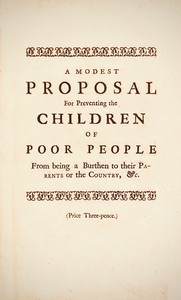 A Modest Proposal: For preventing the children of poor people in Ireland, from being a burden on their parents or country, and for making them beneficial to the publick
Swift's bureaucratic precision weaponizes cold rationalism—form itself becomes the critique. The essay's deadpan economic calculations force readers to inhabit the very logic that produces atrocity, exposing how reason divorced from moral imagination justifies tyranny.
- 2
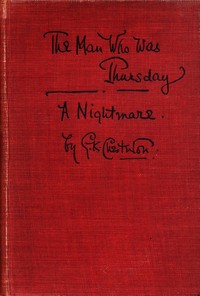 The Man Who Was Thursday: A Nightmare
Chesterton's surrealism destabilizes bourgeois certainty through epistemological confusion—Syme's vanishing table, the "snaky" cigar smoke. While Swift forces moral reckoning through horror, Chesterton invites contemplation of how language and reality itself can be deconstructed to question assumptions about power and order.