Beauty as Epistemic Mask: Texts That Aestheticize Violence
Reading of texts where aesthetic form serves to mask rather than expose power's arbitrariness. These works achieve technical sophistication but validate elite epistemology over democratic scrutiny—where beauty overwrites accountability and myth-making replaces moral reckoning. Contrast with Swiftian satire that forces inhabitation of oppressive logic; here, beautiful language renders violence consumable rather than demanding transformation of our relationship to arbitrary power.
- 1
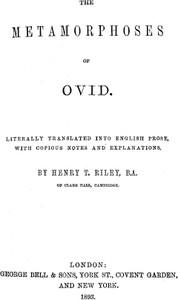 The Metamorphoses of Ovid, Books I-VII
Ovid's Metamorphoses exemplifies this category: aesthetic perfection serving gallery reverence over democratic scrutiny. Ovid's transformations—Daphne becoming laurel fleeing Apollo, Io ravished by Jupiter then changed into heifer—aestheticize arbitrary divine violence through lyrical beauty that masks power systems rather than exposing them. Unlike Swift forcing inhabitation of oppressive logic ("two hundred thousand couple" calculating human children as commodities), Ovid renders violations as elegant poetry safe for elite consumption. Text achieves technical brilliance but validates epistemic authoritarianism: beauty overwrites accountability, myth-making replaces moral reckoning. As Voltaire's Salon debate noted, classical texts demand scrutiny not just for claims but for whose reality they validate—here, elite reason over lived experience. 3-star verdict acknowledges poetic achievement while rejecting political efficacy; the question remains whose suffering becomes beautiful footnote rather than demanding recognition of complicity in arbitrary power systems.
- 2
 The Picture of Dorian Gray
Wilde's aesthetic masterpiece validates the very superficiality it ostensibly critiques. Dorian's portrait—a mirror where decay occurs rather than youth—renders corruption consumable, beautiful, even desirable. The form itself performs what Swift would condemn: rendering violence (moral degradation) as elegant spectacle. Wilde's beauty is epistemic mask par excellence: "The only way to get rid of a temptation is to yield to it"—seduction becomes method, vice becomes artistry. Text achieves technical brilliance through aesthetic perfection serving gallery reverence over democratic scrutiny. Question remains whose reality gets validated? Wilde's aristocratic aestheticism, where surface matters more than substance, becomes political philosophy itself. 3-star acknowledges prose innovation while rejecting ethical efficacy; the portrait demands moral reckoning that refuses to come.