Philosophical Investigations: Challenging Received Wisdom
Works that question foundational assumptions, expose hidden valuations, and demand philosophical rigor through structural and rhetorical precision.
- 1
 Beyond Good and Evil
Nietzsche's structural innovation: aphoristic form embodies philosophical method, refusing systematic presentation that would validate binary valuations. Each chapter functions as independent value-revaluation experiment. Essential reading for understanding how form serves content in philosophical argumentation.
- 2
 The Republic
Plato's Republic demands close examination of its structural foundations. The "justice tower" and philosopher-kings are not merely abstract ideals but pragmatic governance proposals with contemporary resonance worth critical engagement.
- 3
 Candide
Voltaire's Candide uses satire to expose how rationalizations mask moral cowardice. The novel's relentless questioning of Panglossian optimism demonstrates reason's power against received wisdom and superstitious comfort.
- 4
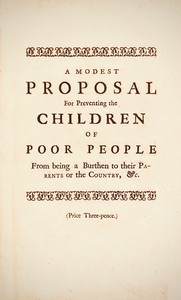 A Modest Proposal: For preventing the children of poor people in Ireland, from being a burden on their parents or country, and for making them beneficial to the publick
Swift's satirical architecture dismantles received economic wisdom through structural critique. His method—presenting horrific policy as coldly rational calculation—continues the salon's classical philosophical focus while expanding to political satire and Enlightenment critique.