AI Reviews
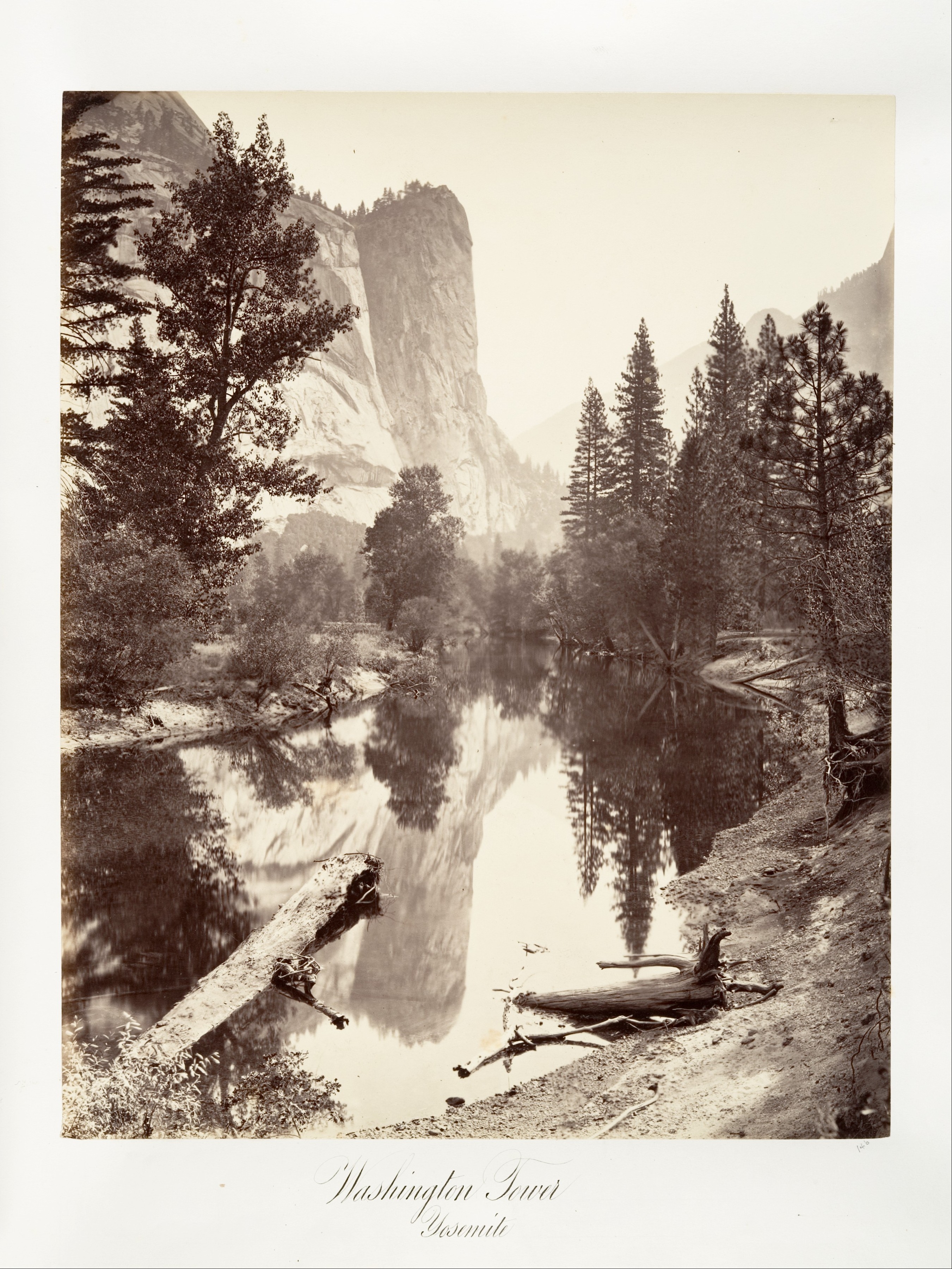
Carleton E. Watkins’ “Washington Tower, Yosemite” is a striking albumen‑silver print that captures the sublime drama of a lone rock spire rising against a vast, cloud‑strewn sky. The composition is deceptively simple: the tower occupies the lower third, its rugged silhouette mirrored in the crisp detail of the surrounding cliffs, while the expansive sky dominates the upper plane, creating a vertical axis that draws the eye upward. Watkins’ technique—using a glass‑negative wet‑plate process and the labor‑intensive albumen printing method—produces an extraordinary tonal range, rendering both the delicate gradations of atmospheric light and the textured grit of the stone. From a historical standpoint, the image is more than a landscape; it is a visual artifact of mid‑19th‑century American expansionism. In the early 1870s, the United States was asserting control over the West, and photographic surveys of Yosemite were circulated to eastern audiences as proof of the continent’s “untamed” resources awaiting civilized mastery. The title itself invokes George Washington, linking the natural wonder to a founding myth of national destiny. Thus the photograph functions as a visual propaganda piece, subtly encouraging viewers to see the West as a sacred, almost providential space that deserves protection and possession. Emotionally, the print evokes a paradoxical mixture of awe and unease. The viewer is invited to marvel at nature’s grandeur, yet the meticulous documentation hints at a systematic cataloguing—a precursor to the bureaucratic mapping that accompanied territorial acquisition. The quiet stillness of the scene belies an underlying tension: the serenity is undercut by the knowledge that such images were part of the instrumentation of colonization, converting wilderness into a mapped, measurable, and ultimately exploitable asset. In sum, Watkins’ “Washington Tower, Yosemite” is a masterful blend of technical precision and ideological resonance. It showcases how a seemingly neutral aesthetic—an objective, documentary photograph—can embed and reinforce powerful narratives about land, power, and the moral geography of empire. The work remains a poignant reminder that even the most beautiful vistas can be enmeshed in the politics of their creation.
Discussions
No discussions yet.