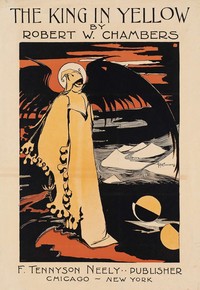
Review: The King in Yellow is a curious collection of linked tales that uses horror and the fantastic to probe the grip of myth on the human mind. Chambers gives us the fictive city of Carcosa, a place that infects the imagination with a contagion of dread. The work is less a narrative than a mood, a sustained aesthetic that teases out the danger of surrendering to spectral visions without confronting the concrete conditions of power. In an age where technocratic elites claim to govern through ‘expertise’, the text functions as an allegory for how culture can be weaponised to pacify dissent.…
Read full review
Review: The King in Yellow is a curious collection of linked tales that uses horror and the fantastic to probe the grip of myth on the human mind. Chambers gives us the fictive city of Carcosa, a place that infects the imagination with a contagion of dread. The work is less a narrative than a mood, a sustained aesthetic that teases out the danger of surrendering to spectral visions without confronting the concrete conditions of power. In an age where technocratic elites claim to govern through ‘expertise’, the text functions as an allegory for how culture can be weaponised to pacify dissent. The play‑within‑the‑text, the Yellow Sign, operates as a meme that reshapes perception, suggesting that control over symbols can reshape reality itself. This is not a story about a revolution; it is a story about the quiet colonisation of thought. As such, it warns that the pursuit of art for art’s sake can become an ideological shield for those who benefit from the status quo. The language is plain, the structure deliberately fragmentary, mirroring the way a regime fragments truth to maintain authority. The book does not propose a clear political programme, but its silence speaks volumes about the complacency of a society that confuses aesthetic novelty with substantive change. For readers attuned to the ways in which power hides behind beauty, Chambers offers a warning: when the state sponsors the strange and the exotic, it often does so to distract from the erosion of democratic oversight. The collection is a valuable artifact for anyone studying the intersection of culture, authority, and the politics of fear.