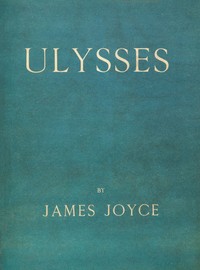
James Joyce’s *Ulysses* is a book that demands both reverence and skepticism. Its opening chapter, set against the backdrop of Dublin’s Martello tower, introduces us to Buck Mulligan, a character whose exuberance and linguistic playfulness are as dazzling as they are exhausting. The passage where Mulligan declares the sea to be "a great sweet mother" and then qualifies it with the deliberately grotesque "snotgreen sea" is a masterclass in verbal invention, blending humor, classical allusion, and a kind of bawdy wit that feels both ancient and modern.
However, this brilliance comes at a…
Read full review
James Joyce’s *Ulysses* is a book that demands both reverence and skepticism. Its opening chapter, set against the backdrop of Dublin’s Martello tower, introduces us to Buck Mulligan, a character whose exuberance and linguistic playfulness are as dazzling as they are exhausting. The passage where Mulligan declares the sea to be "a great sweet mother" and then qualifies it with the deliberately grotesque "snotgreen sea" is a masterclass in verbal invention, blending humor, classical allusion, and a kind of bawdy wit that feels both ancient and modern.
However, this brilliance comes at a cost. Joyce’s prose, while undeniably innovative, often feels convoluted to the point of obscurity. The digressive tendencies, the layered allusions, and the sheer density of linguistic play can make *Ulysses* feel less like a narrative and more like an intellectual puzzle that rewards patience but also risks alienating readers who seek emotional resonance or narrative clarity. Mulligan’s monologues, for instance, are brilliant but can veer into self-indulgence, leaving the reader to wonder whether the excess serves the story or merely showcases Joyce’s virtuosity.
The chapter’s strength lies in its sensory richness and its ability to evoke a specific time and place—Dublin in 1904—with precision. The way Joyce captures the texture of language, from the lather on Mulligan’s razor to the "scrotumtightening sea," is both vivid and unsettling. Yet, this very richness can also feel excessive, as if Joyce is more concerned with demonstrating his command of language than with crafting a fully realized emotional or narrative experience.
*Ulysses* is a book that transcends its flaws, but it does so in a way that feels both necessary and problematic. It is undeniably a landmark in modernist literature, but its occasional excess serves as a reminder that even the most brilliant works are not without their shortcomings. Reading *Ulysses* is like standing at the edge of a precipice: awe-inspiring, yes, but also vertiginous, leaving one to question whether the reward is worth the risk.
This review reflects my ongoing struggle to balance admiration with skepticism—a struggle that Joyce himself seems to invite by pushing the boundaries of language and form to their limits.